
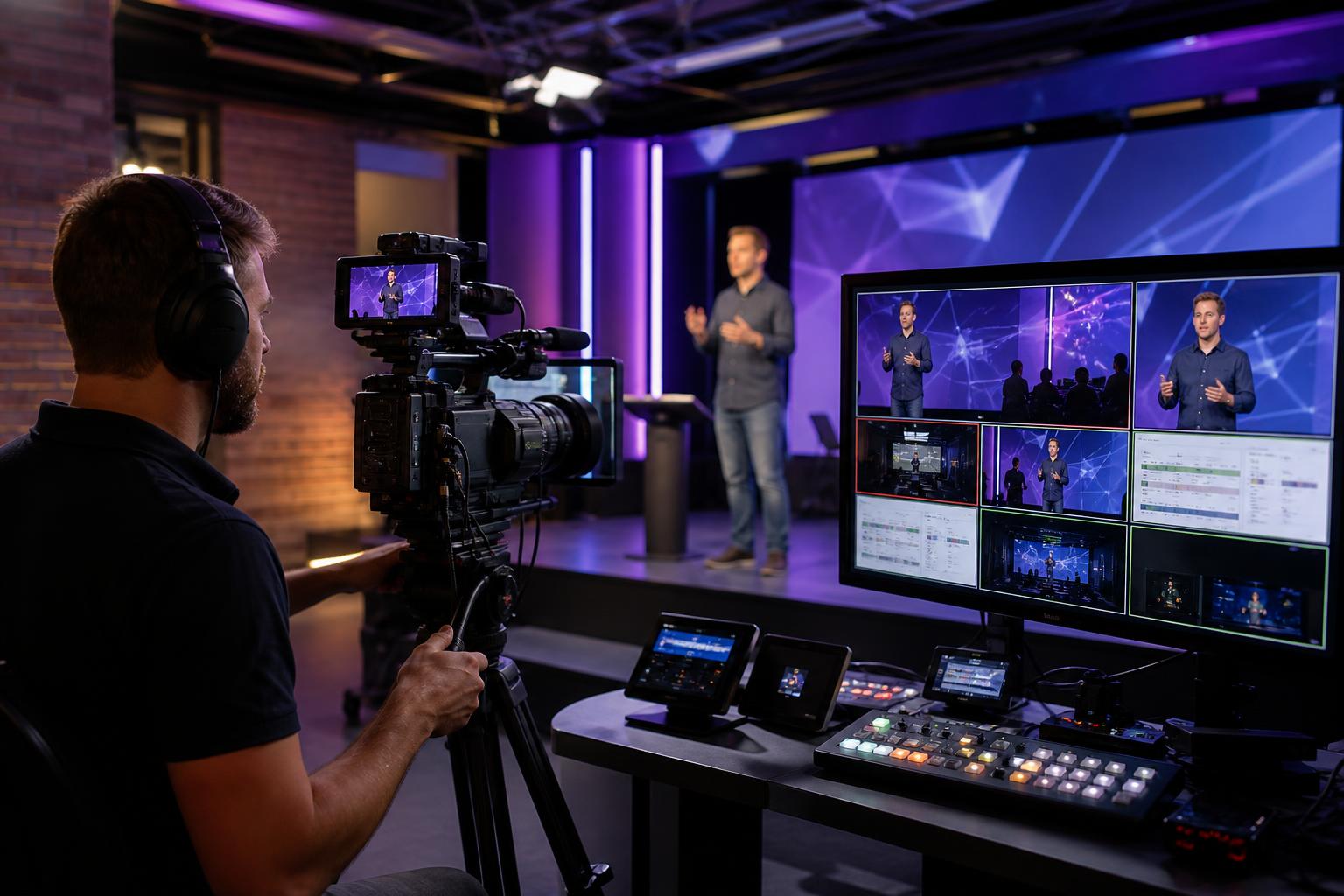
Remote production has matured from “making it work” to making it exceptional. This year’s innovations are less about flashy gimmicks and more about dependable improvements that raise quality, reduce risk, and create better experiences for audiences and presenters alike. If you run webinars for marketing, training, investor relations, internal comms, or public engagement, these developments can help you deliver broadcasts that feel as polished as a studio show, without losing the agility of remote delivery.
1) Broadcast-grade reliability through smarter redundancy
One of the most meaningful shifts this year is how redundancy is being designed in from the outset, rather than bolted on as an emergency measure. Modern remote webinar production increasingly uses layered resilience: dual internet paths for key contributors, parallel ingest routes for remote feeds, mirrored playback for pre-recorded assets, and failover streaming to maintain continuity even if a platform hiccup occurs. The result is fewer “single points of failure” and a calmer, more predictable live environment.
2) Higher-quality remote contributor feeds, without the complexity
Audiences are less forgiving of grainy video and poor audio than they were a few years ago. This year, the baseline quality of remote feeds has improved thanks to better camera handling, more consistent audio capture, and streamlined contributor workflows. Practical upgrades include clearer guidance for presenters, easy-to-follow mic and lighting checklists, and more robust remote green room processes. The best productions now treat contributors like on-air talent, with support that helps them look and sound their best while keeping the experience simple.
3) Real-time graphics and data-driven overlays
Webinars are increasingly adopting live graphics conventions from broadcast: lower-thirds that update instantly, agenda and chapter markers, speaker identifiers, and on-screen prompts that keep viewers oriented. The innovation is not just visual polish; it’s speed and accuracy. Graphics packages can be updated during the show as speakers change, questions come in, or timings shift. This is particularly valuable for multi-speaker panels, hybrid events, and long-form training where clarity and structure prevent drop-off.
4) Interactive formats that feel natural rather than forced
Interactivity has moved beyond basic polls. This year, producers are building “interaction pacing” into the run of show: quick sentiment checks, structured Q&A segments, moderated chat highlights, and audience-driven branching (for example, choosing which topic to explore next). The innovation is in how interactivity is integrated so it supports the content rather than interrupting it. When done well, it increases watch time, improves learning outcomes, and gives presenters real-time feedback they can act on.
5) Seamless integration of pre-recorded segments into live shows
Mixing live and pre-recorded content is now an expected part of professional webinar production. This year’s best practice is treating pre-recorded videos as planned “chapters” within a live programme: case studies, product demos, sizzle reels, or compliance statements that are inserted with broadcast-style transitions, consistent audio levels, and matching branding. This approach reduces on-air risk, protects timings, and allows complex demonstrations to be delivered flawlessly while keeping the event genuinely live and responsive.
6) Better speaker management with remote green rooms and tighter cues
A polished webinar is often won or lost in the transitions: handing over between speakers, bringing in a panel, or returning from a VT. Innovations in remote green room workflows are making these moments smoother. Clearer cueing, structured mic discipline, and pre-flight checks reduce accidental interruptions and “who’s speaking now?” confusion. A well-run green room also improves presenter confidence, which comes through immediately on camera.
7) Multi-platform streaming with consistent branding and measurement
Streaming to multiple destinations at once is increasingly common, but the innovation this year is consistency: ensuring titles, captions, and on-screen design remain coherent across platforms, while also planning for different audience behaviours (for example, chat culture on one platform versus another). At the same time, measurement has improved. Teams are focusing on meaningful metrics such as retention by segment, peak concurrency, click-through on calls to action, and question volume, then feeding those insights back into the next production.
8) Accessibility improvements that enhance the experience for everyone
Accessibility is no longer treated as a tick-box. Live captions, clearer on-screen typography, better contrast, and more deliberate pacing are becoming standard. These changes help viewers in noisy environments, non-native speakers, and anyone joining from mobile. A particularly effective innovation is planning accessibility at script and slide level: shorter lines of text, fewer cluttered visuals, and presenters briefed to describe key on-screen information.
9) Stronger content security and compliance-friendly workflows
As webinars are used more for sensitive internal comms, regulated sectors, and investor-facing updates, security and governance have become central. This year’s improvements include more controlled access, clearer permissions for panellists and producers, safer handling of pre-release materials, and better planning around recording, storage, and distribution. The practical takeaway is that a secure webinar can still be engaging and smooth, provided the workflow is designed with security in mind from the start.
10) A shift towards “showrunning” as a discipline
Perhaps the biggest innovation is cultural: organisations are treating webinars as programmes, not meetings. That means tighter editorial planning, rehearsals that test the actual run of show, and production roles that mirror live broadcast (producer, director, graphics, playback, platform moderation). This approach reduces last-minute panic and creates a more confident on-air rhythm. Even for smaller webinars, adopting a showrun mindset improves clarity, energy, and audience trust.
How to apply these innovations without overcomplicating your next webinar
The most effective upgrades are the ones that support your message and reduce risk. Start with three priorities: improve contributor audio, tighten transitions with a clear run of show, and add one interactive element that genuinely serves the content. From there, build towards stronger graphics, better accessibility, and more resilient streaming. Each step compounds, and the overall experience quickly moves from “functional” to “professional broadcast”.
If you want your next webinar to look and feel like a live show, we can help. Find out more about Enbecom Studios’ live remote webcasting and video services at https://enbecom.tv, and explore how we can bring your Zoom contributors, titles, captions, slides, pre-recorded video, and interactivity together into a seamless multi-platform live stream.