
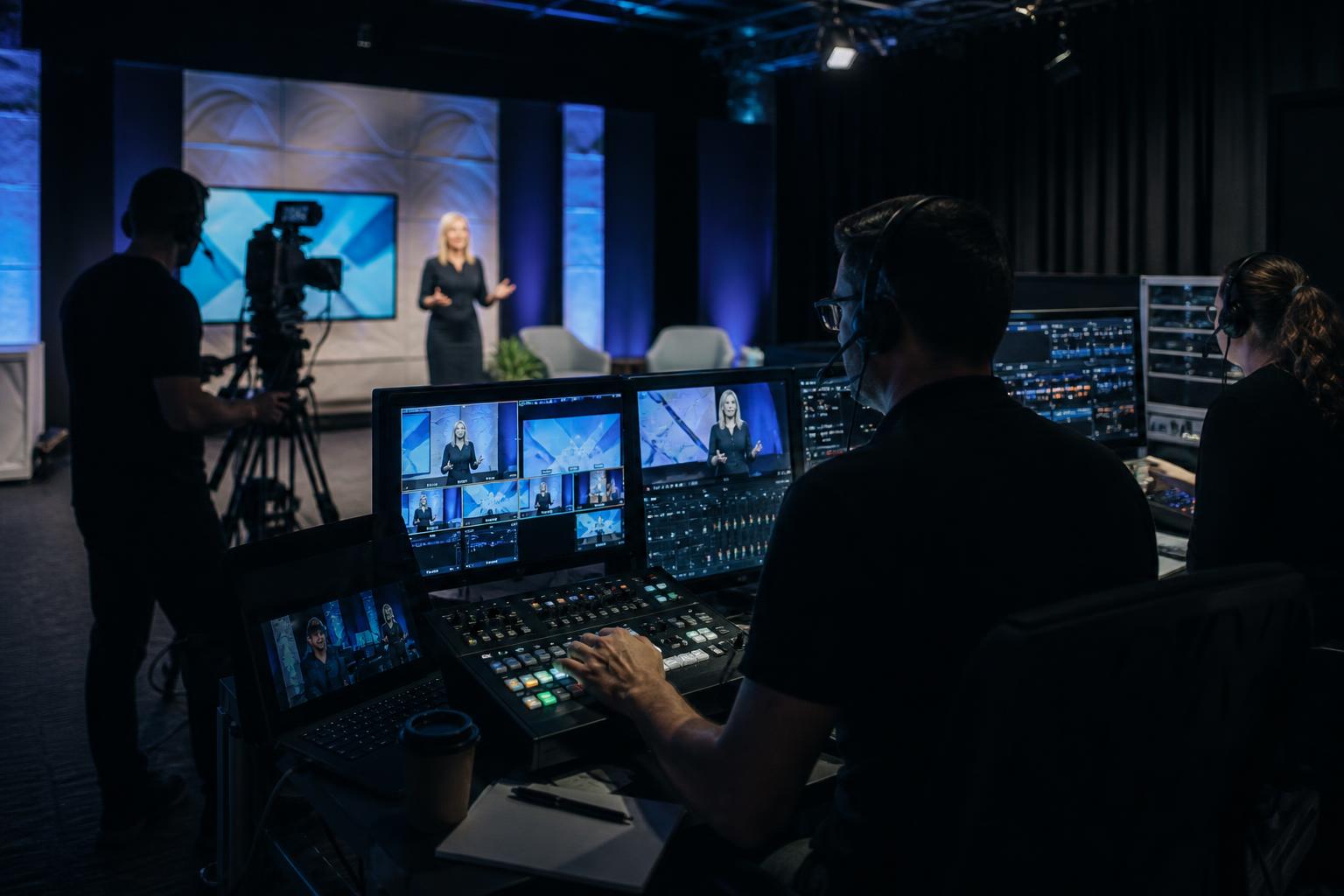
Webinars look simple on the surface, but the difference between “it worked” and “it landed” is rarely down to luck. When you are bringing together live presenters, remote guests, slides, video inserts, captions, audience interaction and multiple streaming destinations, you are effectively running a live broadcast. Working with an experienced webinar team pays off because it reduces risk, protects your brand, and frees your speakers to focus on delivering a great session rather than troubleshooting on the fly.
Reliability is not a nice-to-have when you are live. Even a short audio dropout, a screen share that will not load, or a guest who cannot connect can undermine confidence and distract from your message. An experienced team anticipates common failure points and builds in resilience: backup audio routes, alternative dial-in options, duplicate playback sources, and clear runbooks for every segment. The result is a production that feels calm, controlled and professional, even when the unexpected happens.
Preparation turns a “web meeting” into a polished broadcast. A seasoned webinar crew will shape the running order, confirm who is speaking when, and ensure every asset is ready: slides in the right format, videos tested, lower thirds spelled correctly, names and titles confirmed, and any on-screen graphics aligned with your brand. Rehearsals are not just box-ticking; they are where timing is tightened, transitions are smoothed, and presenters become comfortable with cues and handovers.
Audio and video quality are where audiences decide whether to stay. Viewers will tolerate the occasional awkward pause, but they are far less forgiving of poor sound, inconsistent levels, echo, or a presenter who is dimly lit and backlit by a window. An experienced team gives practical guidance ahead of time (microphone choice, room setup, lighting, camera framing, and network stability) and then actively manages levels and sources during the live show. That attention to detail keeps your content accessible and your speakers credible.
Good direction makes presenters better. Many subject matter experts are brilliant in person but feel less natural on camera. A webinar team that regularly works with senior stakeholders knows how to coach without over-producing: where to look, how to pace, how to handle Q&A, and how to recover from minor stumbles. Simple cues and confident stage management help speakers relax, which makes the session feel more human and engaging.
Mixing multiple live Zoom feeds, media and graphics is a specialist skill. Bringing in remote contributors is only the start. The real craft is switching layouts at the right moments, keeping slides readable, adding titles and captions, playing pre-recorded videos cleanly, and ensuring the audience always knows who is speaking and what they should be looking at. When this is done well, the production supports the story rather than competing with it.
Interactivity needs to be designed, not improvised. Polls, moderated Q&A, chat prompts, call-to-action moments and audience contributions can transform a webinar from passive viewing into participation. An experienced team helps you choose the right interaction for your audience and your objectives, then integrates it into the running order so it feels purposeful. They can also moderate and surface questions in a way that protects your speakers and keeps the session moving.
Multi-platform streaming adds complexity that is easy to underestimate. Streaming to multiple destinations can widen your reach, but each platform has its own quirks: ingest stability, latency, chat behaviour, aspect ratios, and how captions or graphics appear. A professional webcast team monitors outputs, manages delays, and ensures the experience is consistent for viewers wherever they join. That is particularly important for high-profile events where you cannot afford a public-facing technical issue.
Brand protection is a real, measurable benefit. A webinar is often a first impression for new prospects, partners, or recruits. Glitches, muddled visuals and inconsistent messaging can quietly erode trust. A well-produced webcast signals competence, care and credibility. It also allows you to maintain brand standards across graphics, speaker names, backgrounds, and the overall tone of the event.
Efficiency improves when roles are clear. When a webinar is run internally, people often multitask: a marketer is producing, an assistant is troubleshooting, and a speaker is trying to manage slides while answering questions. An experienced team separates responsibilities: producer, director, technical operator, moderator. That division of labour removes friction, shortens lead times, and reduces the likelihood of mistakes.
Post-event value is maximised when production is planned end-to-end. The live session is only one part of the return on investment. With the right setup, you can capture clean recordings, isolated speaker feeds, and versions optimised for different channels. Chapters, highlights, short clips, and captioned edits can extend the life of your content for weeks or months. Planning for this from the start is far more effective than trying to salvage assets afterwards.
Ultimately, an experienced webinar team pays for itself by protecting outcomes. When the technology is dependable, the pacing is tight, the visuals are clear and the audience is engaged, your message lands. Your speakers feel supported. Your viewers stay longer and take action more readily. And your organisation looks as professional online as it does in person.
If you are planning an important webinar, virtual event or live webcast and want it to feel broadcast-quality without losing the flexibility of remote contributors, find out more about Enbecom Studios’ live remote webcasting and video services at https://enbecom.tv.