
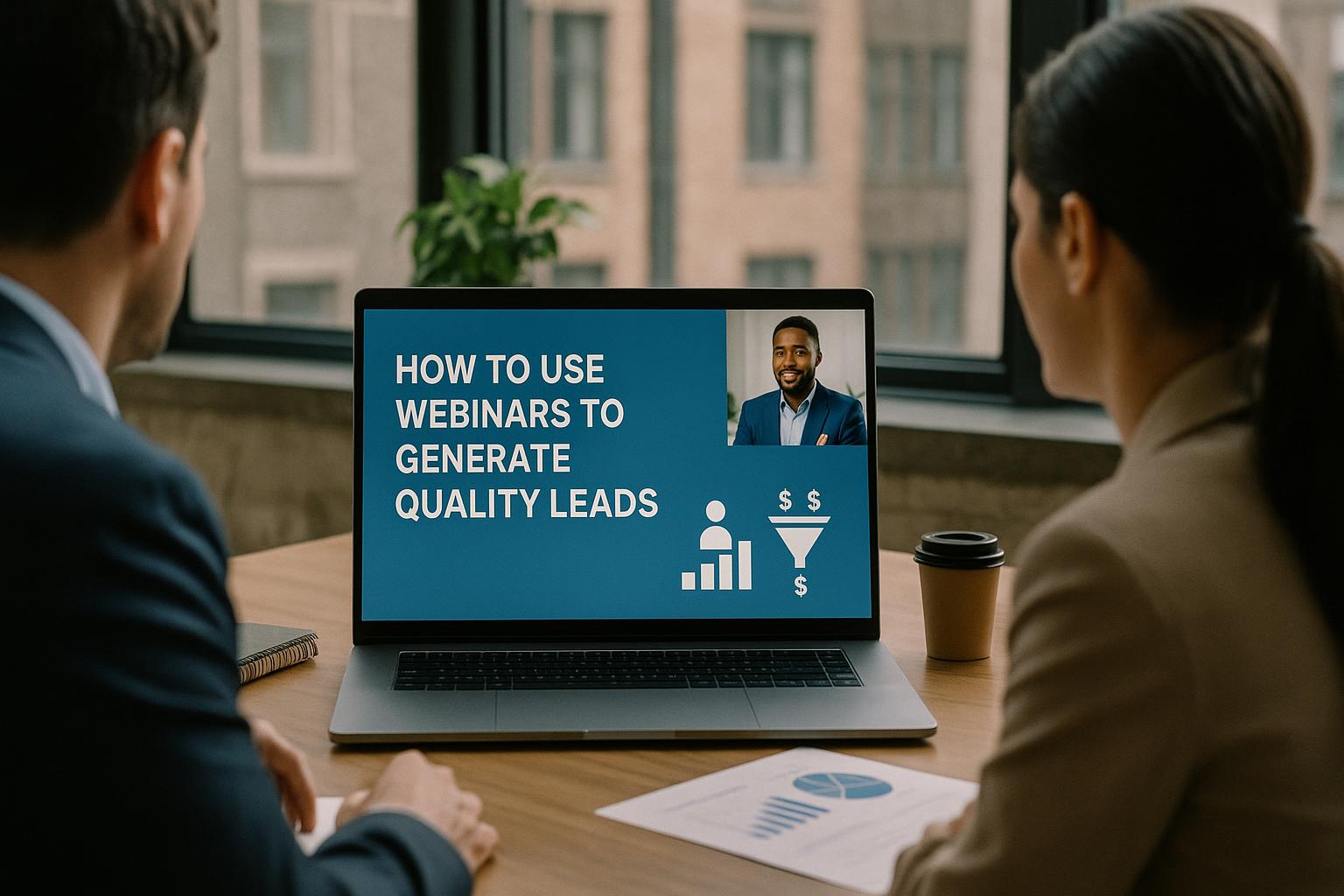
Start with a lead quality definition, not a vanity metric
Webinars can attract large audiences, but lead generation only works when you define what “quality” means for your business. Agree the signals that matter: job role and seniority, industry fit, buying timeframe, budget ownership, current tools, and the specific challenge they want to solve. Set a simple lead scoring model before you promote the event so you can measure outcomes properly, not just registrations and attendance.
Choose a topic that solves a real problem, not a product pitch
The fastest way to lose trust (and good leads) is to run a webinar that’s essentially a sales presentation. Instead, build your session around a practical outcome: a framework, a checklist, a worked example, or a decision guide. High-quality leads are drawn to clarity and competence. If you can help them make progress in 30–45 minutes, they will be more open to a follow-up conversation.
Align the webinar format with the buying journey
Different webinar styles generate different types of leads. For early-stage audiences, run an educational session that helps them understand the landscape and common pitfalls. For mid-stage prospects, use a panel discussion or case study format that shows how others achieved results. For late-stage opportunities, consider a live walkthrough, demo-plus-Q&A, or “ask the experts” clinic where attendees can bring their specific scenario. The more the format matches the audience’s decision stage, the higher the lead quality.
Use registration to qualify without creating friction
Registration forms are a powerful qualifier, but too many fields can reduce conversions. Aim for a balance: ask for essentials (name, email, company, role) and add one or two high-value questions that reveal intent, such as “What are you hoping to achieve?” or “Which best describes your current approach?” Use drop-downs to keep it quick, and include an optional free-text field for context. That single open question often becomes the best input for tailored follow-up.
Target the right audience with focused promotion
Quality leads come from relevance, not reach. Build a short list of ideal attendee profiles and tailor your messaging accordingly. Promote via channels that match your audience: partner lists, professional communities, LinkedIn, customer newsletters, and targeted outreach to accounts you’d like to engage. Create multiple versions of the event description, each speaking to a specific pain point. If you run paid campaigns, optimise for qualified registrations rather than cheapest sign-ups.
Design the content to create engagement signals
Engagement is a proxy for intent. Plan moments that invite participation and help you learn about attendees in real time. Use polls to segment the audience (“What’s your biggest challenge?”), and use Q&A prompts that encourage specificity (“Tell us your use case and we’ll suggest next steps”). If you include downloadable resources, make them genuinely useful: templates, checklists, or a short decision framework. The goal is to create clear signals that help your sales or marketing team prioritise follow-up.
Make production quality work for lead quality
People associate smooth delivery with credibility. Clear audio, well-timed slides, consistent branding, accurate captions, and professional moderation all influence whether attendees stay engaged and trust what they hear. A well-produced webinar also lets you incorporate multiple speakers, live Zoom contributors, pre-recorded segments, and on-screen titles without chaos. When the experience feels polished, senior decision-makers are more likely to remain to the end and respond to next steps.
Build a strong call to action inside the webinar, not just at the end
If you wait until the final slide, you risk losing momentum. Introduce your next step early (“We’ll share a practical worksheet and an optional follow-up clinic at the end”), then reinforce it after a key insight or case study. Keep the action specific and low-pressure: book a 15-minute consult, request an audit, download a toolkit, or register for a deeper session. Make it easy to act with a link in the chat and a clear on-screen prompt.
Segment follow-up based on behaviour and answers
Treat all attendees the same and you’ll dilute results. Segment by signals such as: attended live vs watched on-demand, time watched, poll responses, questions asked, and stated goals from registration. Then tailor follow-up accordingly. For example:
Hot leads: asked a detailed question, stayed to the end, selected a near-term timeframe. Offer a direct conversation with a relevant specialist.
Warm leads: attended but didn’t engage much. Send a concise recap and one helpful resource, then invite them to a shorter follow-up session.
Early-stage leads: registered but didn’t attend. Share the recording with timestamps and offer a guide that helps them self-educate.
Repurpose the webinar to extend lead generation
A webinar should not be a one-off event. Turn it into a campaign: create short clips for social, extract key slides into a carousel, publish a written recap, and produce a “top questions answered” follow-up piece. Gate the on-demand recording if it suits your funnel, or keep it open and capture leads through related downloadable resources. This approach keeps generating qualified interest long after the live date.
Measure what matters: pipeline, not applause
Track the full journey from registration to revenue. Useful metrics include: registration-to-attendance rate, engagement rate (poll participation, Q&A), conversion to next step, meeting set rate, sales qualified lead rate, and pipeline influenced. Look for patterns: which topics attract the right job titles, which channels deliver the best-fit companies, and which segments convert fastest. Use those insights to refine your next webinar rather than repeating the same format.
Common pitfalls to avoid
Avoid vague topics that try to appeal to everyone. Don’t overload slides or let sessions run long without interaction. Don’t rely on a single speaker if the topic benefits from multiple perspectives. And don’t neglect rehearsal and run-of-show planning: timing, handovers, video playback, and contingency plans all affect attendee experience and, ultimately, lead quality.
Make your next webinar a lead engine
When webinars are designed around a clear audience, a practical outcome, strong engagement signals, and disciplined follow-up, they consistently generate high-quality leads. If you want help delivering a polished live experience that brings in remote Zoom contributors, mixes slides and video, adds titles and captions, and streams to multiple platforms with interactive elements, explore Enbecom Studios’ live remote webcasting and video services at https://enbecom.tv.